| Bigger Picture: Sports Stores' Loss of Share Breaks Longer Term Trend | |
In spite of a setback this past year, sporting goods stores have, in the longer term, been increasing their market share of sports equipment sales, according to data gathered from the NSGA Sporting Goods Market reports of the past several years. In 2009, market share of dollars spent in the sports group of stores slipped to 51.0% of the $24.4 billion spent on equipment. The previous year the group had commanded 54.7% of market dollars.
Mass merchants increased their market share to 26.5% in 2009. The previous year their market share was 24.2%. Other types of retailing also increased market share in 2009, 22.6% versus 21.2% the previous years.
Since 2004, the sports group and other retailing have been increasing market share. The sports group has increased market share by 2.7 percentage points (48.3% to 51.0%). Other retailing has increased market share by 5.4 percentage points (15.4% to 18.4%). The growth in other retailing has been the result of Internet sales.
The longer term loser (down 7.9 percentage points) has been mass merchants..
The sports group consists of full-line sporting goods stores (everyone from Dick's and TSA, to a single-store independent) and specialty sports shops (e.g. bike shops, ski shops, etc.). Mass Merchants include department stores (e.g. Sears), discount stores (K mart, WalMart, Target) and warehouse clubs.
The weakness of the economy as well as a reduction in new store openings among large sporting goods chains were the most likely contributors to the loss of market share in the sports group.
Data for this analysis is taken from "The Sporting Goods Market in 2010" and previous years' reports. The current report is a copyrighted NSGA consumer study that projects 2009 purchases of sporting goods products based on a survey of 100,000 U.S. households. National Family Opinion, Inc. (NFO) maintains the consumer panel used in the survey, which is balanced to parallel actual American household distribution as reported by the U.S. Bureau of Census, so that the data can be projected nationally.
The report comes in both printed and electronic formats.
"The Sporting Goods Market in 2010" is available for $295 for retailer/dealer members of the Association and free to manufacturer and sustaining NSGA members. For non-members, the cost is $340. For additional information, contact Dan Kasen, NSGA, 1601 Feehanville Drive, Suite 300, Mount Prospect, IL 60056-6035. Phone: (847) 296-6742, ext. 108; E-mail: dkasen@nsga.org; or fax: (847) 391-9827.
|
| Monthly Retail Trade Report: May Sporting Goods Store Sales Moderate |
Following strong increases in March and April, the Monthly Retail Trade Survey, prepared by the U.S. Census Bureau, reported more modest sales growth in sporting goods stores for May. For the most recent reporting month (May), sales were $3.3 billion (preliminary), 3.1% ahead of May 2009. Sales in March had risen 12.1%; in April, 5.8%.
Year-to-date sales are 5.2% ahead of the same five months in 2009. Year-to-date sales for 2010 are $14.8 billion.
Sales for 2009 were $37.7 billion, up 1.6% for the year. This was the slowest growth since 2002 when growth was 0.2%. Sales for 2008 were $37.1 billion, up 2.3% from 2007. Sales for 2007 reached $36.3 billion, up 6.3% from 2006 sales of $34.1 billion. Sales in 2006, up 10.6% over the previous year, represented the strongest increase in the past 10 years.
The estimated annual sales for sporting goods stores in the U.S. Census Bureau Monthly Retail Trade is consistent with sporting goods sales reported in the NSGA study "The Sporting Goods Market." The U.S. Census Bureau estimates are based on data from the Monthly Retail Trade Survey, Annual Retail Trade Survey, and administrative records and have been adjusted using results of the most recent economic census. The NSGA study is based on a sampling of 80,000 U.S. households.
For a full comparative chart of sales in sporting goods stores, visit the members-only "Research & Statistics" area of the NSGA website (www.nsga.org). |
|
June CPI for Sporting Goods Remains Negative, but Spread Narrows |
As the spread between the two indices continued to narrow, the CPI for Sporting Goods remained modestly negative while the CPI for All Items remained modestly positive. The CPI for Sporting Goods fell 2.1% in June following declines of 1.8% in May, 2.9% in April and 3.0% in March.
The previous five months had seen declines of 2.0% to 4.4%. It had risen 0.3% in October. These eight months are the first in negative territory since June 2008 when the CPI for Sporting Goods turned positive and had remained there since then.
The CPI for All Items, which turned negative in March of 2009 and had remained there most of the year, rose just 1.1% in June following rises of 2.0% in May, 2.2% in April, and 2.3% in March.
At 3.2%, the June spread (the distance between the CPI for Sporting Goods and the CPI for All Items) is below the 3.8% May spread, the 5.1% April spread, and the 5.3% March spread. It is also well below the 6.5% spread in February. The February 2010 spread between the two CPIs was the highest it has been since February 2009. In that month, the spread hit 7.3%.
For 2009, the Sporting Goods CPI averaged a 2.1% increase following a 2.3% increase in 2008. These are the first years since 2004 that the Sporting Goods CPI has shown a positive change from the previous year.
For 2007, the Sporting Goods CPI averaged a 1.5% decline. For 2006, it averaged a 1.3% decline. For 2005, the decline averaged 1.1%; for 2004, 1.2%; for 2003, 0.8%; for 2002, 2.6%. The Sporting Goods CPI reached its negative peak in December 1999, when it was down 5.8% versus the previous year.
|
| Outdoor Sales Strong in June | |
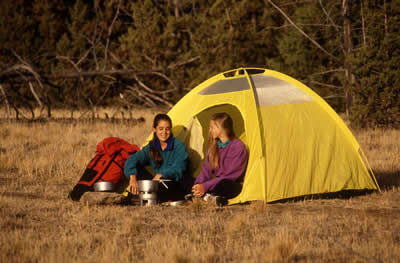 June sales rose 13% in the outdoor segment (outdoor chains, outdoor specialty and online), according to sales data from Leisure Trends' Outdoor RetailTRAK™. This signals the fifth straight month of positive retail sales. June sales rose 13% in the outdoor segment (outdoor chains, outdoor specialty and online), according to sales data from Leisure Trends' Outdoor RetailTRAK™. This signals the fifth straight month of positive retail sales.
Online sales fueled the growth, gaining almost 50% in dollars sold compared to June 2009 and accounting for 22% of June sales in the outdoor channel, up from 17% last June and 14% in June 2007. Outdoor chains gain 11% and outdoor specialty stores had only flat sales for the period.
Outdoor specialty saw double-digit gains during the early months of 2010, but growth slowed through the spring and early summer. Categories such as recreation tents, packs, camp accessories and footwear have sold well but other categories, like apparel, are suffering in specialty.
The data, from LTG's Topline RetailTRAK™, is available free to retailers and suppliers for the remainder of 2010. To view, sign up for the LTG report by clicking here.
|
| Firearms Sales Indicator Breaks Downward Trend |
 Breaking a downward trend, background checks for firearms rose 3.9% in June, according to data from the FBI's National Instant Criminal Background Check System (NICS). Except for a minimal rise of 0.6% in April, background checks had been trending downward since January of this year. In June, 1,005,876 background checks were performed. The June 2009 figure was 968,145.
Year-to-date 2010 background checks number 6.9 million, down 1.7% from 7.0 million year-to-date 2009.
The unprecedented rise in background checks began in October 2008 and reached a record 1,529,635 requests for background checks in November 2008, a 42% jump over the previous November. For 2009, total background checks numbered 14.0 million, up 10.4% from 12.7 million in 2008.
FBI background checks are required under federal law for all individuals purchasing firearms from federally licensed retailers and are considered a strong indicator of actual sales by industry experts.
|
| Complete Cost of Doing Business Survey and Get Personalized Report |
It's that time again. The biennial NSGA Cost of Doing Business Survey form is now available online. Invest about four minutes, and in return, NSGA will send you a personalized report analyzing your company's financial health.
This personalized, confidential Company Performance Report will show the results of your company alongside those of the entire industry and of retailers similar in size to your own. It allows you to compare expenses, margins, payroll & benefits costs, occupancy costs, sales per employee, and much more. If you asked a CPA to do this for you, the cost would be hundreds, perhaps thousands, of dollars.
The benchmarks that this customized performance report provides allow you to quickly identify areas that you can investigate for financial improvement. To both survive and thrive, you can use these measures to help focus your efforts.
To receive the Company Performance Report, go to www.NSGAsurvey.com, register and choose either "Retailer" or "Team Dealer," and then fill out the form. To receive the customized report, just register while at this site.
The NSGA Cost of Doing Business Survey provides insights into the performance of the sporting goods industry, including information pertaining to sales by category, company profile statistics, accounts receivable information, profits and losses, balance sheet items and space and personnel productivity.
To complete the process, just send the requested company financials to Industry Insights, a research company that specializes in gathering retail financial data. No one at NSGA sees your response, which means complete confidentiality is maintained.
For more information, contact NSGA Vice President of Information & Research Thomas B. Doyle, (800) 815-5422, ext. 107, or e-mail: tdoyle@nsga.org.
|
|

 Research Newsletter


